The zero-entry mine, built in layers
Autonomy already drives the trucks. It does not yet run the mine. INORE builds the layers that close that gap, then the machines that operating data will design. Every item on this page carries its honest stage.
The truck is solved. The mine is not.
Autonomous haul trucks grew 84% in a single year, from roughly 2,080 to 3,832 units, and billions of tonnes have moved under OEM haulage systems. Four manufacturers account for nearly nine in ten of those trucks.
Yet people still enter autonomous zones every day, to inspect a stopped truck, clean a sensor, deliver a part, connect a charger. Each entry halts the zone and puts a person where machines work. That layer, everything around the truck, is what INORE builds. Read the analysis →
One system, three jobs
One live mine model
Coordinates tasks, energy, service events and exceptions across mixed OEM fleets, without replacing the systems already on site. Read-only telemetry first, then approved actions.
IN SIMULATION · 2026Robots answer exceptions
When a machine stops, SCOUT goes first: inspects, cleans and verifies sensors, delivers tool pods, connects charging, and investigates, before any person crosses the fence. SCOUT →
V0 CONCEPTService at the boundary
An airlock for the autonomous zone: people restock from the safe side, machines dock from the pit side, for charging, tools, consumables and sensor care.
CONCEPT · FIRST BUILD 2028
Future machine programs
Reference designs, co-developed with OEM and manufacturing partners only after the operating layer is proven. Imagery is concept rendering.
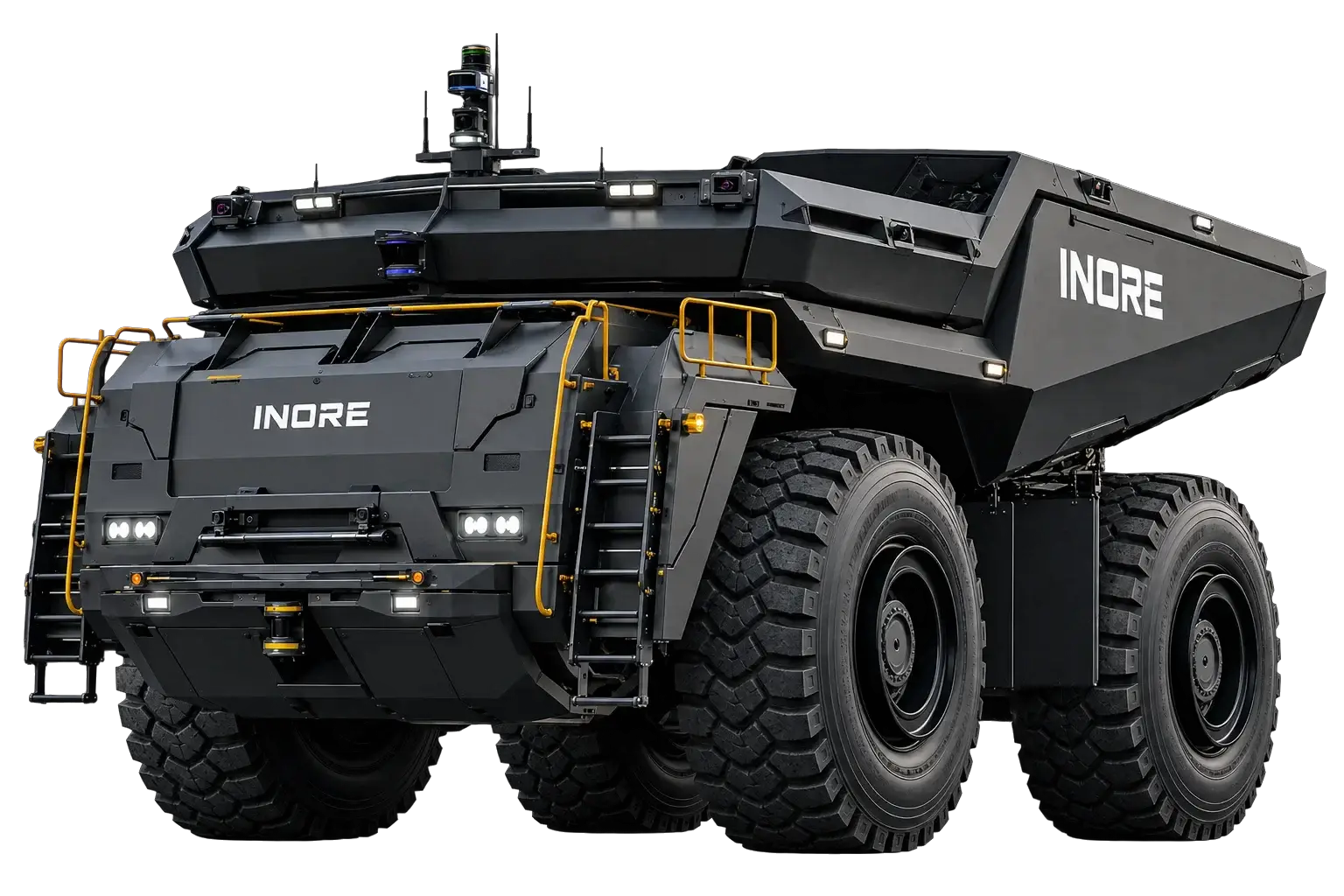
Reference design: a driverless 240 t haul fleet for continuous extraction through dust, darkness and heat.
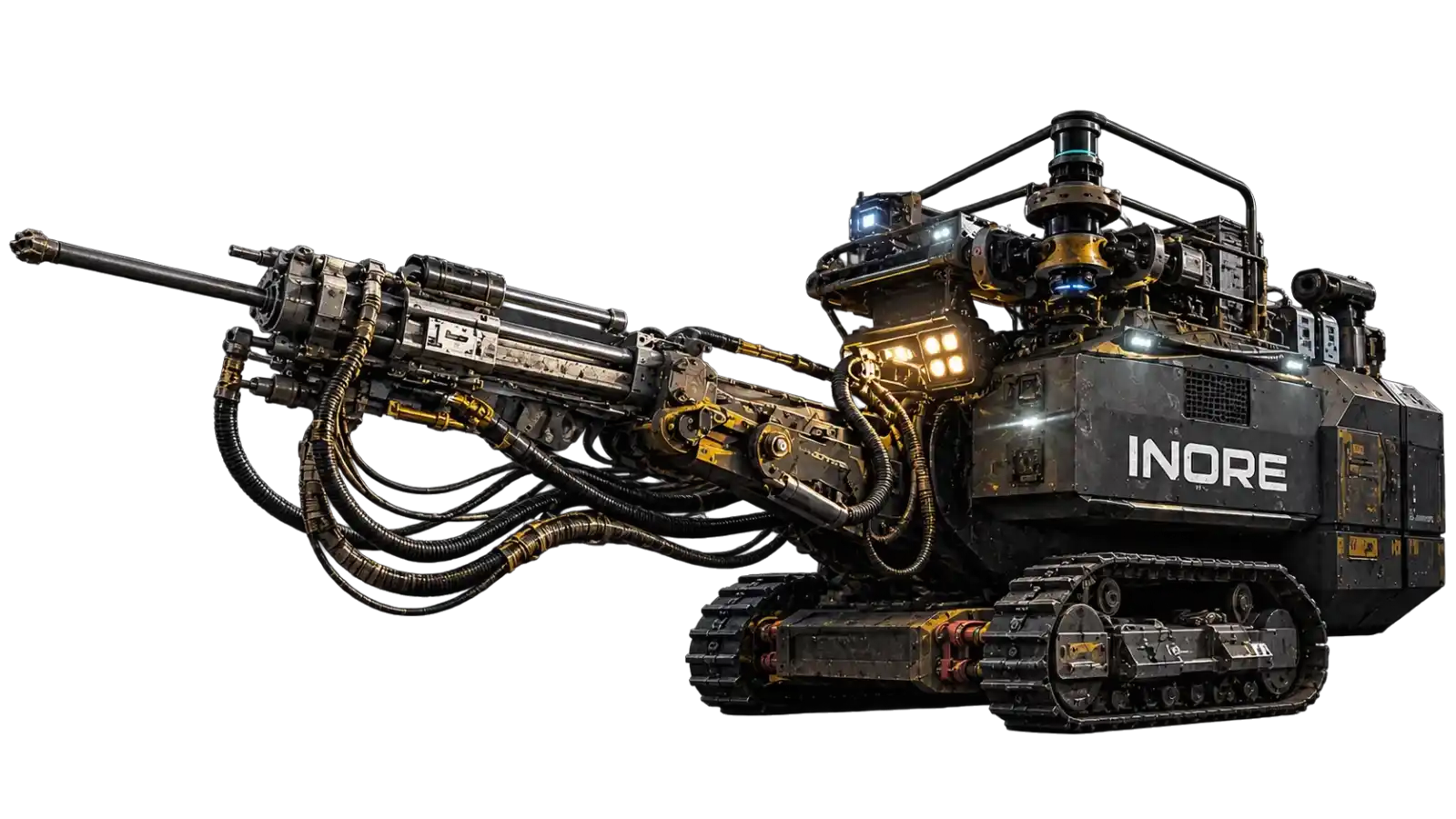
Reference design: a robotic deep-bore platform for ore too deep, too hot and too unstable for crews.
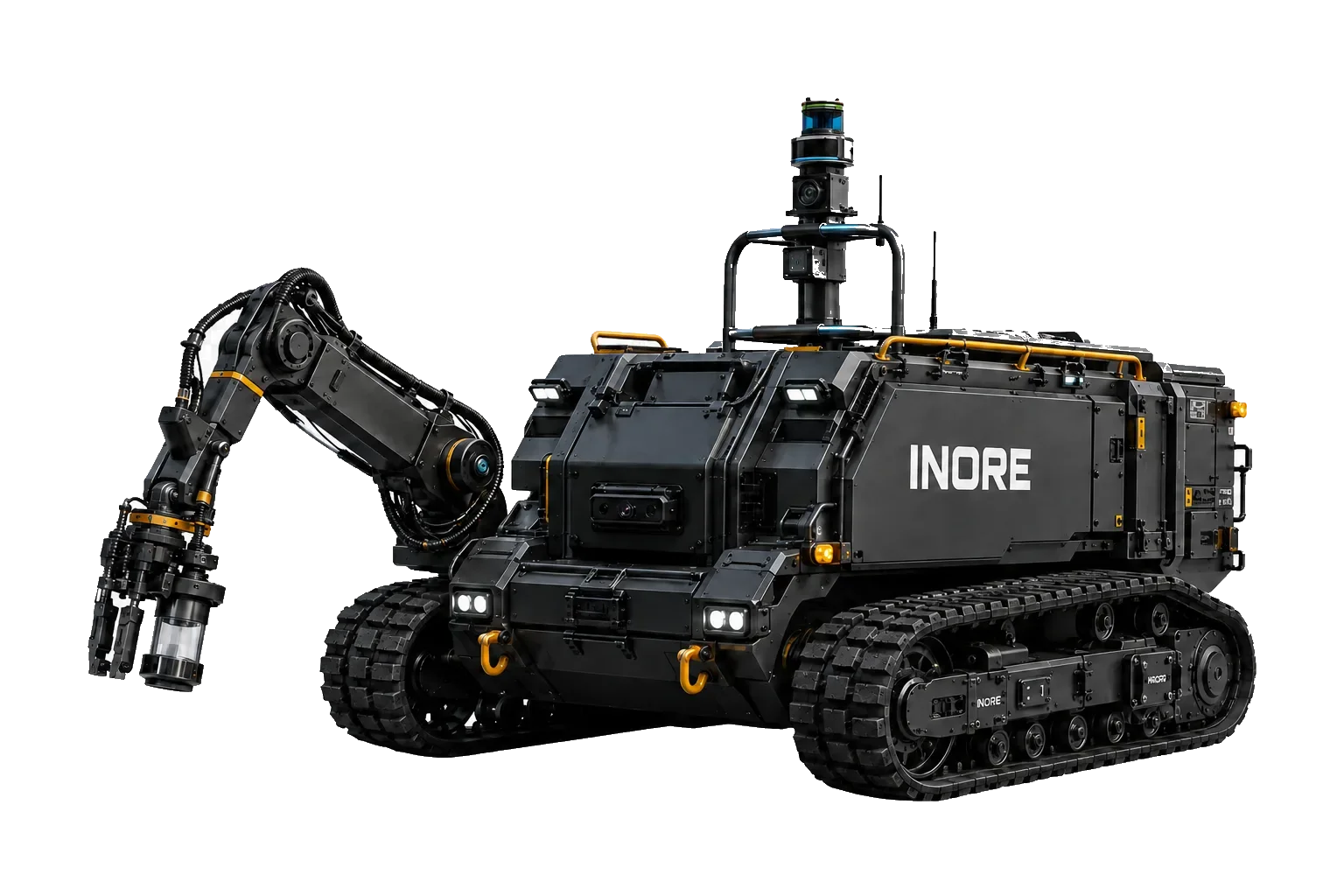
The first product in steel: inspection, sensor care, delivery, docking, exception investigation.
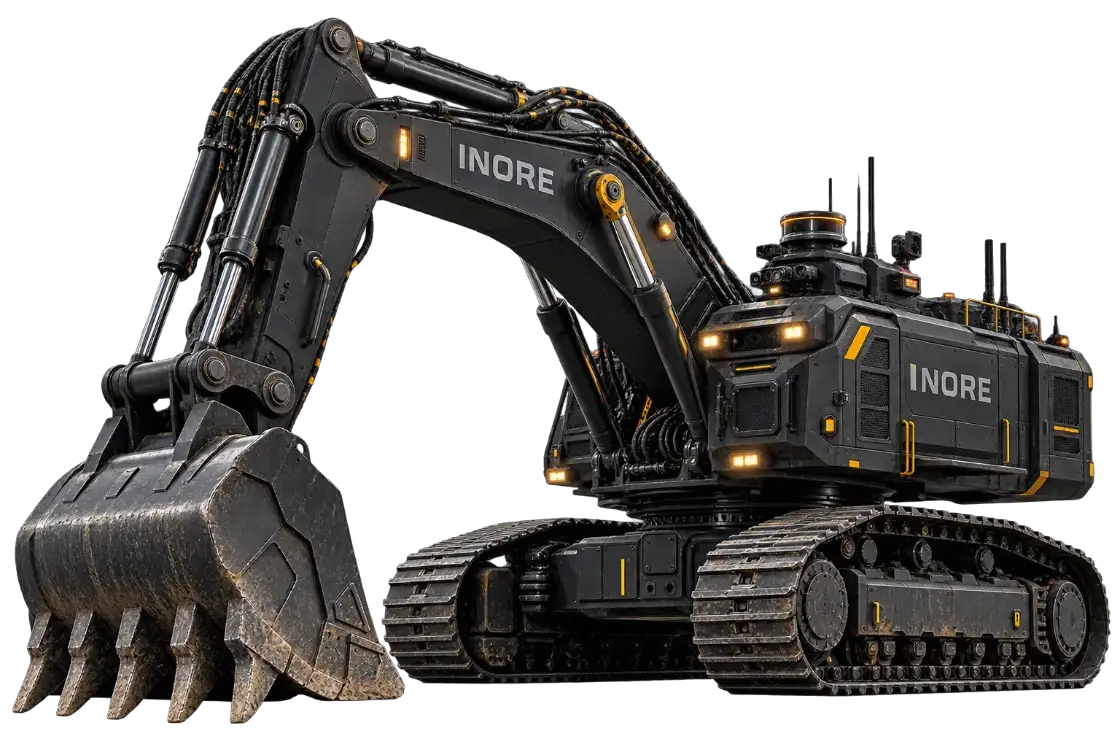
Reference design: autonomous loading matched to the haul cycle, four passes to a full tray.
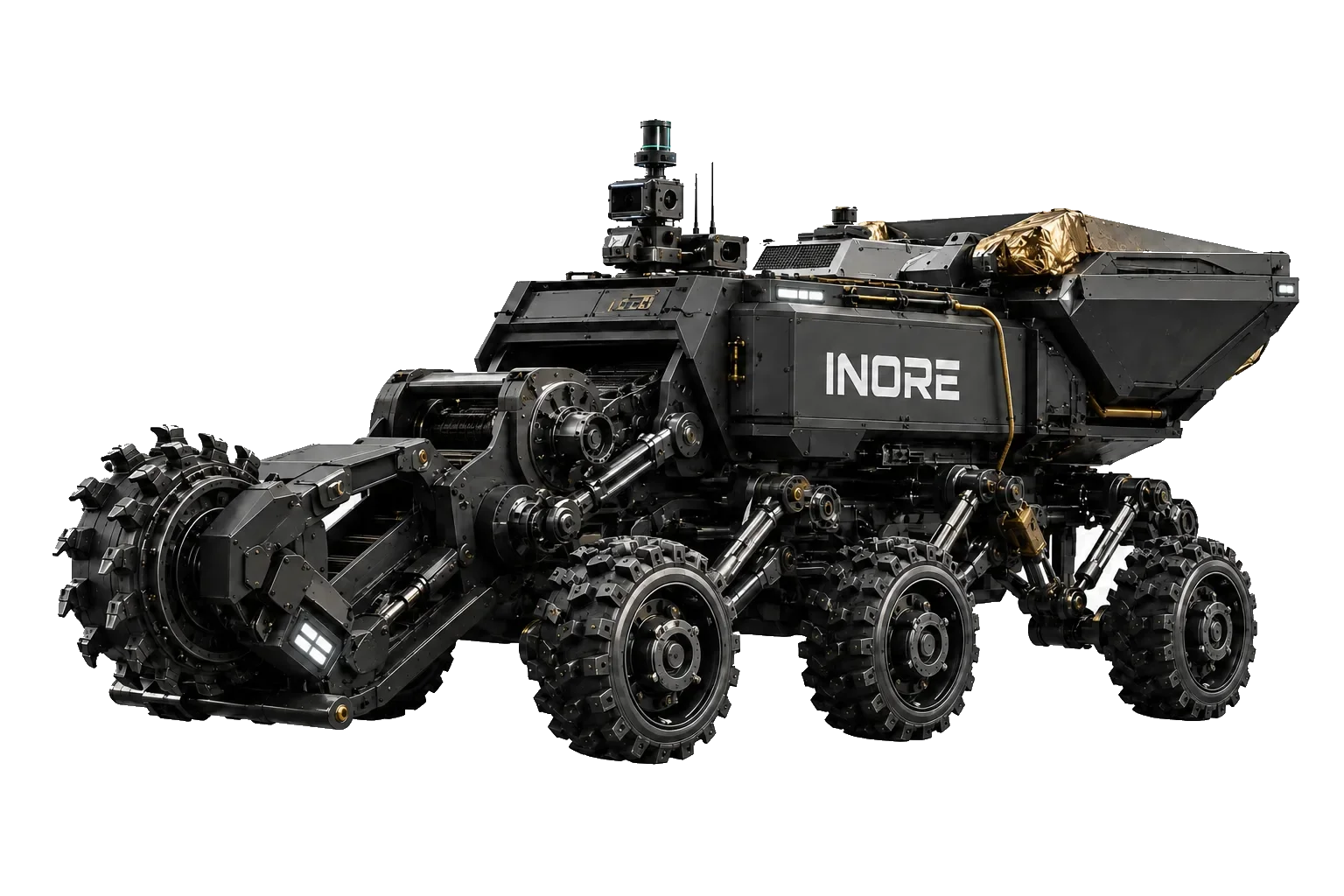
R&D horizon: the same subsystems, offline autonomy, dust-tolerant hardware, cooperative robots, qualified for regolith.